

Tag: featured

  • Wise Giving Wednesday: Charity Fraud Awareness Week and How to Avoid Scams

    Wise Giving Wednesday: Charity Fraud Awareness Week and How to Avoid Scams

    Across the world organizations are joining forces to help donors stay vigilant against charity fraud.

    What Is Charity Fraud Awareness Week?

    This week, we’d like to draw attention to the Fraud Advisory Panel and the Charity Commission for England and Wales’ Charity Fraud Awareness Week, taking place from December 8–12 this year.

    The goal of this campaign is to bring together organizations across the charity and not-for-profit sectors worldwide to raise awareness and share best practices for preventing fraud and cybercrime.

    According to the Fraud Advisory Panel’s Charity Fraud Report 2024, among 139 participating charities, 42% reported experiencing fraud or attempted fraud. Of the detected cases, 50% were committed by individuals within the organization, and 44% of charities did not have a fraud response plan in place.

    Common Charity Scams Donors Should Watch For

    To help you stay safe from fraud this giving season, we’d like to outline some of the ways bad actors may attempt to scam you and what to watch out for, along with a few tips to consider before making a donation.

    Keep in mind that scams can take many forms, and fraudsters may try to target you through direct mail, telemarketing, online platforms, or anywhere you choose to give.

    Bad actors may attempt to scam you by:

    • Tugging at your heartstrings. Many scammers prey on good intentions by sharing emotional stories about people or animals in desperate need, often without providing specific or verifiable details. They may also exploit humanitarian crises or natural disasters to deceive donors and take advantage of your well-intended, hard-earned money.
    • Using a slightly altered version of a real charity’s name. Fraudsters will sometimes use names that are very similar to those of trusted charities, counting on people not taking the time to verify that they’re giving to the legitimate organization.
    • Taking advantage of individuals who can’t recall whether they’ve donated before. Unfortunately, they sometimes target people with cognitive challenges, pretending that the person has previously supported their organization.
    • Using crowdfunding. Scammers will often use online resources such as social media platforms to trick individuals into giving to a made-up person or tragedy through use of fraudulent stories and photos. These criminals might also use AI technology to help create images or even stories.

    Tips to Consider Before You Give

    • Think before you click. Be careful not to click on links or scan QR codes before you’ve vetted an organization. Visit charity websites to confirm the organization’s identity.
    • Match the name. Ensure you’re giving to the right charity, also by visiting charity websites and cross-checking to confirm the correct name.
    • Be wary of false identity. If you get an appeal from a charity staff member through email or social media, you can contact the charity directly to ensure they are an employee of the organization to which you intend to give.
    • Look for government registration. About 80% of states require charities to register with either their attorney general’s office or secretary of state. Check here to see if the charity in question is registered with the IRS to solicit funds, but keep in mind that registration is not an endorsement.

    Use Give.org to Avoid Charity Fraud

    Visit Give.org to see if the charity meets all 20 of our Standards for Charity Accountability.

    Giving to a BBB Accredited Charity can help you give with confidence. As always, trust but verify.


    Building Trust Series: Beverly Francis-Gibson CEO of Together Women Rise

    In this episode of our Building Trust Video series, we talk with Beverley Francis-Gibson, Chief Executive Officer of Together Women Rise. Read our full report on the organization here.


    Recent Reports

    We are always working with charities to publish or update reports for donors. Visit Give.org or local BBBs to check out any charity before giving. Our recently evaluated charities include:

    Finally, remember to let us know by going to give.org/charity-inquiry if you are interested in seeing a report on a charity not on the list and we will do our best to produce one.

  • Giving Tips for GivingTuesday

    Giving Tips for GivingTuesday

    Did you know that Americans gave almost $600 billion to charity last year? And that for many charities, up to one-third of their donations come in over the holiday giving season? Tuesday December 2nd is GivingTuesday, a global movement that is the official kick-off for holiday giving.

    How to Give Wisely on GivingTuesday

    To help donors in this spirit of generosity, BBB Wise Giving Alliance offers the following advice.

    Go to Give.org before contributing. There will be many options and opportunities to donate on GivingTuesday, but our best suggestion is to find out more about a charity before you contribute. Charities can demonstrate they are trustworthy by agreeing to in-depth evaluations in relation to the BBB Standards for Charity Accountability. Get free access to charity reports by visiting Give.org to find out if an organization is BBB Accredited (i.e., meets all 20 BBB Charity Standards.)

    Be cautious about name confusion. When charities seek support for the same cause, the names can sometimes appear similar. Before you give, be sure you have the exact name of the charity to avoid a case of mistaken identity.

    Understand registration requirements. In the U.S., about 40 states require charities to register with a government agency, usually a division of either the Attorney General’s office or Secretary of State’s office. (In Canada, check with the Canada Revenue Agency.) Keep in mind that registration with a government agency does not mean the government approves, recommends, or endorses the charity.

    Consider tax-exempt status. There are over 1 million organizations that have applied for and received charitable tax-exempt status under section 501(c)(3) of the Internal Revenue Code. In part, this means these groups are eligible to receive gifts that are deductible as charitable donations and will file an annual financial form with the IRS. It does not mean the Internal Revenue Service approves, recommends or endorses the charity. The following link provides access to IRS information on charities.

    Watch out for overly emotional appeals. If an appeal brings tears to your eyes, make sure it is also clear about what the charity intends to do to address the issues. Visit the charities website for details about their program services.

  • Wise Giving Wednesday: Most Americans Unaware of Charity Funding Cuts Ahead of GivingTuesday

    Wise Giving Wednesday: Most Americans Unaware of Charity Funding Cuts Ahead of GivingTuesday

    As GivingTuesday approaches, a new BBB WGA Donor Trust Report reveals a concerning truth: most Americans are unaware that many charities are struggling with funding cuts and rising demand — a disconnect that could limit the season’s generosity.

    What the Donor Trust Report Reveals About Public Awareness in 2025

    Last week, BBB WGA released its newest Donor Trust Report on Public Awareness of Challenges Facing the Charitable Sector in 2025.

    Many charities faced a challenging year in 2025, marked by significant reductions in federal funding, new federal interpretations of DEI policies and funding criteria, and rising demand for services, all compounded by political polarization and a declining donor base.

    The report examines public awareness and reactions.

    Generational Gaps in Perception: Who Believes Charities Are Well-Funded?

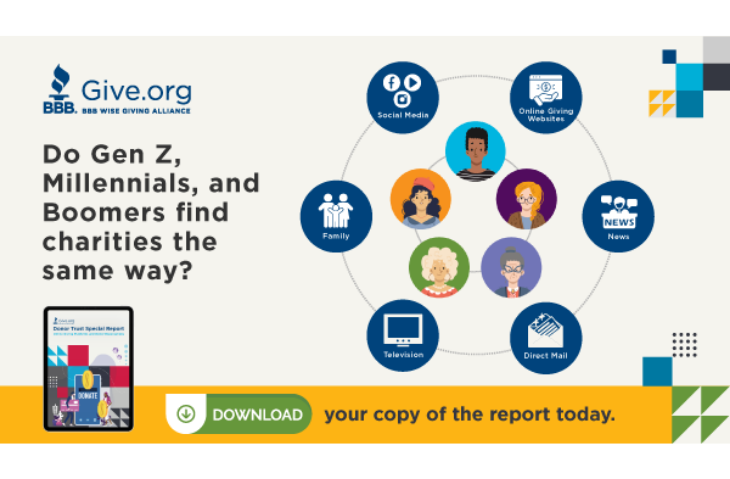
    We found that only 32% of U.S. adults surveyed were aware that the federal government had reduced its support for charities in 2025.

    Many Americans, particularly younger generations, believe charities are actually receiving more government funding — not less.

    For example, 43% of Generation Alpha respondents (ages 18–20) believed government funding had increased, compared to just 17% of Baby Boomers.

    Yet, among those who were aware, 65% viewed the cuts as either “somewhat” or “very” negative, citing concern for the most vulnerable communities.

    Why These Misperceptions Matter — Especially Now

    As we approach GivingTuesday, the global day for generosity to charities, these findings suggest that a fundamental misalignment between perception and reality may hinder public responsiveness.

    5 Tips to Give Wisely in the Face of Charity Funding Cuts

    For those hoping to support charities affected by funding cuts this giving season, we offer a few tips to consider:

    1. Support Organizations Affected by Federal Funding Cuts. During this giving season, there are many opportunities to help charities that are struggling in the wake of federal funding cuts, including food banks, shelters, disaster preparedness, and others.
    2. Consider Different Ways to Help. There are multiple ways to support charities beyond financial donations, such as volunteering, giving goods, or helping raise awareness for their cause.
    3. Get the charity’s exact name. With so many charities in existence, mistaken identity is a common problem. Thousands of organizations include terms like “cancer” in their names but are not connected to one another.
    4. Check websites for basics. A charity’s mission, program and finances should be available on its site.
    5. Verify the charity’s trustworthiness. Access reports on Give.org to identify if a charity meets the 20 BBB Charity Standards. Also, many states require charities to register, usually with the office of the attorney general, before soliciting.

    Recent Reports

    We are always working with charities to publish or update reports for donors. Visit Give.org or local BBBs to check out any charity before giving. Our recently evaluated charities include:

    Finally, remember to let us know by going to give.org/charity-inquiry if you are interested in seeing a report on a charity not on the list and we will do our best to produce one.
  • BBB’s Give.org Study: Charity Funding Cuts Seen as Harmful, But Awareness Remains Low

    BBB’s Give.org Study: Charity Funding Cuts Seen as Harmful, But Awareness Remains Low

    Arlington, VA (November 20, 2025) – According to new research from BBB’s Give.org, fewer than one in three respondents (32%) were aware of reductions in federal funding for charities in 2025. Among those who were aware, 65% viewed the cuts as either somewhat or very negative.

    The standards-based charity-evaluation group today released the Give.org Donor Trust Report: Public Awareness of Challenges Facing the Charitable Sector in 2025. The report, based on a survey of more than 1,500 U.S. adults, gauges public awareness of the challenges faced by the charitable sector in 2025, including federal funding cuts, new federal interpretations of diversity, equity, and inclusion (DEI), and the perceived politization of the sector.

    “Federal funding cuts are widely seen as harmful by those who are aware of them. Unfortunately, overall public awareness remains limited,” said Bennett Weiner, President and CEO of BBB’s Give.org, “transparency in communicating these cuts could help strengthen public support for affected organizations, as our results suggest that most people recognize these reductions impact the most vulnerable and influence which types of causes can prosper.”

    Other report highlights include:

    • Only 9% of participants disagree with the statement “charities today are more involved in political issues than they were 10 years ago.”
    • When asked to place themselves on a scale between two statements: on one end “Charities are primarily engaged in promoting social good causes rather than political agendas,” and on the other “Charities are primarily engaged in political agendas rather than promoting social good causes,” 24% of Boomers, compared to only 13% of Gen Alphas, believe charities are primarily focused on promoting social good causes rather than political agendas.
    • Fewer than one in three respondents (32%) were aware of reductions in federal funding for charities in 2025. Younger participants were more likely to believe that charities received increased government funding during that year, with 43% of Gen Alphas, compared to 17% of Boomers, thinking government funding increased.
    • Among respondents aware of federal funding cuts for charities in 2025, most (65%) viewed these reductions as either somewhat negative (23%) or very negative (43%).
    • 62% agree the significant federal funding cuts for charities impact the most vulnerable populations in the U.S., and 60% agree that these cuts will change the type of causes that can endure or thrive.
    • Among those aware of changes in federal DEI policies affecting charities, 53% viewed these changes negatively and 44% viewed them positively.

    For a free copy of the report, go to Give.org/DonorTrust. For Basic Giving Tips this giving season, go to https://give.org/tips-for-donors/basic-giving-tips

    Generational age ranges used in the Give.org Donor Trust Report: Generation Alpha (18-20), Generation Z (21-27), Millennial (28-44) Generation X (45-60) Boomers (61-79), Matures (80 and above).

    BBB’s Give.org urges donors to give thoughtfully by taking the time to investigate charities before making a donation and to visit Give.org to verify if a charity meets the 20 BBB Standards for Charity Accountability.

    ABOUT BBB WISE GIVING ALLIANCE: BBB Wise Giving Alliance (BBB’s Give.org) is a standards-based charity evaluator that seeks to verify the trustworthiness of nationally soliciting charities by completing rigorous evaluations based on 20 holistic standards that address charity governance, results reporting, finances, fundraising, appeal accuracy and other issues. National charity reports are produced by BBB’s Give.org and local charity reports are produced by local Better Business Bureaus – all reports are available for free at Give.org.

    ABOUT BBB: The Better Business Bureau has empowered people to find businesses and brands they can trust for over 110 years. In 2024, people turned to BBB more than 220 million times for BBB Business Profiles on 5.5 million businesses. Visit BBB.org for free access to these business reports. The International Association of Better Business Bureaus is the umbrella organization for the local, independent BBBs in the United States and Canada. (Please note that BBB reports on charities are now exclusively available at Give.org.)

    MEDIA CONTACTS: For more information, journalists should contact Elvia Castro (703-247-9322 or ecastro@give.org)

  • Wise Giving Wednesday: Updates on Government Settlement Agreements and Actions Against Charities

    Wise Giving Wednesday: Updates on Government Settlement Agreements and Actions Against Charities

    What happens when a charity crosses legal lines? Read about our latest update on recent government actions taken against nonprofits and why that matters to you as a donor.

    What Is the Government Actions Against Charities Page?

    This week, BBB WGA would like to highlight our Government Settlement Agreements and Actions Against Charities page, which summarizes government actions taken by state and/or federal agencies, such as attorneys general or secretaries of state, against charities.

    These actions are primarily drawn from the National Association of State Charities Officials (NASCO) 2024 and 2025 annual reports, an association of state offices tasked with regulating and overseeing charities that solicit donations from the public in the United States. Our page also includes final actions brought to BBB Wise Giving Alliance’s attention from other sources.

    How BBB WGA Uses Government Information in Charity Reports

    While our voluntary BBB Standards for Charity Accountability go beyond what is required by government regulators, when government actions come to our attention, we review each case to determine whether the outcome affects our report, considering the specific circumstances as well as the timing.

    Our list is not intended to be comprehensive but covers many cases involving both alleged deceptive solicitations and alleged governance or break of fiduciary duty cases.

    Why This List Matters for Donors

    We encourage you to check our list if you believe you may be receiving solicitations from a charity you suspect could be included.

    You can also visit our alphabetical list of charity reports. When there is a recent government action involving a charity, we add a note in the body of the report describing the circumstances and outcomes of the case.

    View the Full List of Government Settlement Agreements and Actions Against Charities


    How Agentic AI Can Empower Nonprofits: A Conversation with Zigment CEO Dikshant Dave

    In this episode of AI & Trust in the Charitable Sector, Ezra Vazquez-D’Amico of BBB Wise Giving Alliance sits down with Dikshant Dave, CEO of Zigment, to explore how Agentic AI can help nonprofits do more with less—without compromising trust or mission. From real-world collaborations with BBB Accredited Charities like Hope for Ukraine and KABOOM!, to tools that automate engagement across chat, SMS, and social media, this conversation offers a practical look at how AI can enhance empathy, build trust, and strengthen relationships across the nonprofit ecosystem.

    You can see the episode’s full description here. Interested in more content around AI and Nonprofits? Check out our AI & Trust in the Charitable Sector newsfeed.


    Recent Reports

    We are always working with charities to publish or update reports for donors. Visit Give.org or local BBBs to check out any charity before giving. Our recently evaluated charities include:

    Finally, remember to let us know by going to give.org/charity-inquiry if you are interested in seeing a report on a charity not on the list and we will do our best to produce one.
  • How Agentic AI Can Empower Nonprofits with Zigment CEO Dikshant Dave

    How Agentic AI Can Empower Nonprofits with Zigment CEO Dikshant Dave

    In this episode of AI & Trust in the Charitable Sector Ezra from the BBB Wise Giving Alliance (Give.org) sits down with Dikshant Dave, CEO of Zigment, to discuss how Agentic AI is redefining what’s possible for nonprofits. Together, they explore how intelligent, trustworthy AI systems can extend human empathy, automate donor and volunteer engagement, and help organizations do more good with fewer resources — without ever losing sight of mission and values.

    From early collaborations with BBB Accredited charities like Hope for Ukraine and KABOOM!, to real-world use cases such as AI-powered donor communication, multi-channel “conversation graphs,” and 24/7 empathetic support, this discussion dives deep into how technology can strengthen trust and scale impact across the nonprofit ecosystem.

    In this conversation, you’ll learn:

    Why nonprofits are uniquely positioned to benefit from Agentic AI.

    How Zigment’s tools create “first-layer” engagement with donors and volunteers through chat, SMS, and social media — while staying true to each organization’s mission.

    What “conversation graphs” mean for building consistent relationships across every touchpoint.

    How trust, transparency, and data security can form the foundation of ethical AI adoption.

    Why AI won’t replace human empathy — it frees staff to focus on the meaningful, mission-driven work that matters most.

    Key takeaway:
    AI isn’t here to replace people — it’s here to amplify their ability to connect, empathize, and create change. When built on trust and aligned with mission, Agentic AI becomes a force for good.

    Learn more:
    🔹 BBB Wise Giving Alliance → https://give.org
    🔹 Zigment → https://zigment.ai
    🔹 Zigment for Nonprofits → https://zigment.ai/solutions/non-profit

    #nonprofits #aiforgood #DonorTrust #ethicalai #transparency #AskGive #GiveOrg #BBBWiseGivingAlliance #generativeai #techforgood #philanthropy #digitaltransformation

  • Wise Giving Wednesday: International Fraud Awareness Week

    Wise Giving Wednesday: International Fraud Awareness Week

    As we recognize International Fraud Awareness Week, BBB Wise Giving Alliance joins the global effort to spotlight how individuals and organizations can protect themselves with some key charity fraud prevention tips.

    25 Years of Promoting Global Fraud Awareness

    This week marks the 25th anniversary of International Fraud Awareness Week (November 16-22), dedicated to the global effort “to minimize the impact of fraud by promoting anti-fraud awareness and education.” The week was established by the Association of Certified Fraud Examiners (ACFE), a membership organization of over 95,000 professionals dedicated to anti-fraud training and education.

    Understanding the Cost of Fraud Across Sectors

    According to ACFE’s Occupational Fraud 2024: A Report to the Nations, businesses, governments, and nonprofits cumulatively lose approximately 5% of their revenue each year to fraud. The report is based on more than 1,900 cases of occupational fraud and explores costs, schemes, victims, and perpetrators of fraud.

    Protect Your Donations and Charities Against Fraud

    In honor of International Fraud Awareness Week, we’re sharing two sets of tips: first, tips to help donors avoid fraud; and second, tips from ACFE to help organizations protect themselves against fraud. While ACFE’s guidance is primarily aimed at small businesses, the advice is applicable to charitable organizations.

    Donor Tips to Help Avoid Fraud This Giving Season

    • Don’t fall for excessive pressure to give. If a charity requests that you send money on the spot, be mindful that this could be a ruse to get you to contribute without doing your due diligence. Trustworthy charities will welcome your interest, give you time to verify their legitimacy, and accept your donation at your convenience.
    • Be cautious of vague fundraising appeals. Make sure that program descriptions are clear in any materials, including appeals, annual reports, or websites. Fraudsters might seek to tug at heartstrings without offering specifics.
    • Examine financial statements. While you shouldn’t rely solely on financial information before giving, be alert to groups that don’t readily share financial information or spend very little on program activities.
    • Avoid mistaken identity. Look carefully at names of charities to ensure you are giving to the right organization. Scammers will seek to use similar sounding names to confuse you.
    • Visit BBB’s Give.org to verify if a charity meets all 20 BBB Standards for Charity Accountability (i.e. a BBB Accredited Charity.) You can view our Alphabetical List of Charity Reports and search for charity reports here.

    ACFE’s Best Practices to Reduce Organizational Fraud Risks

    • Adopt a code of ethics for management of employees and controls for identifying vulnerabilities.
    • Establish hiring procedures that verify educational credits and include background checks (as permitted by law).
    • Train employees in fraud prevention.
    • Provide an anonymous reporting system for employees and other stakeholders to help uncover fraud.
    • Communicate anti-fraud policies, consequences of fraudulent behavior, and ways to report fraud to staff.

    Strengthening Cybersecurity to Protect Donor Data

    BBB WGA also encourage charities to proactively keep data as safe from fraud as possible by strengthening cybersecurity measures. Here’s one approach to data security from the BBB.

    We also encourage donors to always review a charity’s privacy policies online to see how the organization keeps your information safe.

    Report Suspected Fraud Using BBB Scam Tracker

    If you suspect you’ve been a victim of fraud, use BBB’s Scam Tracker to report or look up a scam for verification.


    What Can AI Do for Nonprofits? A conversation with AFP’s Art Taylor and Zigment’s Dikshant Dave

    In the latest of our AI Conversations with BBB Accredited Charities, we explore how AI can help—not replace—nonprofits. Bennett Weiner, President & CEO, BBB Wise Giving Alliance is joined by Art Taylor, CEO, AFP Global and Dikshant Dave, CEO of Zigment for a practical discussion on how AI is already supporting donor engagement, streamlining operations, and expanding impact. With real-life insights including an example from Yuriy Boyechko, CEO of Hope for Ukraine (a BBB Accredited Charity), this conversation is packed with ideas for nonprofits ready to explore ethical, mission-aligned AI tools.

    You can see the episode’s full description here. Interested in more content around AI and Nonprofits? Check out our AI & Trust in the Charitable Sector newsfeed.


    Recent Reports

    We are always working with charities to publish or update reports for donors. Visit Give.org or local BBBs to check out any charity before giving. Our recently evaluated charities include:

    Finally, remember to let us know by going to give.org/charity-inquiry if you are interested in seeing a report on a charity not on the list and we will do our best to produce one.

  • Wise Giving Wednesday: Veterans Day Giving Tips for Supporting Military Charities

    Wise Giving Wednesday: Veterans Day Giving Tips for Supporting Military Charities

    As Veterans Day approaches, many donors seek meaningful ways to honor those who served. To help you give wisely, we’ve compiled Veterans Day Giving Tips and a list of BBB Accredited Charities that support veterans and military families.

    Why We Recognize Veterans Day on November 11

    Every November 11 in the United States, we honor military veterans of the U.S. Armed Forces. The significance of this date traces back to the formal end of World War I hostilities, in the 11th hour of the 11th day of the 11th month in 1918.

    Wise Giving Tips for Supporting Veterans Charities

    As we take a day to honor our veterans this November 11, we offer these Veterans Day Giving Tips for those considering donations to charities that support veterans, military service members, and their families this year.

      • Find Programs that match your interests. Veterans’ charities offer a wide range of services, including mental health support, job placement assistance, and housing programs, to name a few. Visit charity websites and look through annual reports to see which charities align with the programs you most want to support. You can learn more about the categories Veterans’ charities on our Veterans’ and Military Service cause page.
      • Avoid mistaken identity. With tens of thousands of charities serving our veterans, the military, and tier families, many of these organizations have similar names. Verify that you’re donating to the intended organization by confirming that the web address, physical address, and phone number match the information provided in any fundraising appeal you receive. We encourage you to always visit our alphabetical list of charities and search page to ensure you’re giving to trustworthy organizations.
      • Don’t be pressured into giving. If a charity pressures you into immediate giving, be cautious. This could be a red flag. Reputable charities should encourage you to take your time and learn about their work. Avoid making hasty giving decisions and take your time to give thoughtfully.
      • Ask how donated items will be used. If veterans’ groups solicit donated goods or clothing, often these items are resold, and the charity may receive a fraction of the proceeds. Before you give, ask how your in-kind gifts will benefit the organization.
      • Be careful with phone appeals. If not managed properly, some telemarketing campaigns for military or veterans organizations can be an expensive way to raise funds with very little going to the organization. If financial efficiency is important to you, look over charity materials on websites and in annual reports for that information.
      • Look up charities on BBB’s Give.org. Please visit Give.org to verify that soliciting veterans and military service charities meet our 20 Standards for Charity Accountability (i.e. a BBB Accredited Charity). Our comprehensive standards address issues from charity governance and finances to effectiveness and appeal accuracy, and go beyond what government agencies require. You can visit our list of nationally soliciting BBB Accredited Military and Veterans Charities below to help you get started.

    BBB Accredited Veterans Charities You Can Trust

    To help guide your giving, here is a selection of nationally soliciting BBB Accredited Charities that support veterans, military families, and service members. Each has been evaluated and met the 20 BBB Standards for Charity Accountability.

    Charity Name Give.org Report
    Armed Services YMCA of the USA View Report
    Blue Star Families View Report
    Boot Campaign, Inc. View Report
    Boulder Crest Foundation View Report
    Children of Fallen Patriots Foundation View Report
    Coalition to Salute America’s Heroes Foundation View Report
    Coast Guard Foundation View Report
    Disabled American Veterans View Report
    EOD Warrior Foundation View Report
    Guide Dog Foundation and America’s VetDogs View Report
    Healing Paws for Warriors View Report
    Homes for Our Troops View Report
    Marine Corps Scholarship Foundation View Report
    Military Child Education Coalition View Report
    Military Spouse Corporate Career Network View Report
    National Military Family Association View Report
    Operation First Response View Report
    Operation Healing Forces View Report
    Pat Tillman Foundation View Report
    Soldiers’ Angels View Report
    Travis Manion Foundation View Report
    United Service Organizations (USO) View Report
    United Through Reading View Report
    USA Cares View Report
    VetJobs View Report
    VFW Foundation View Report
    VFW National Home View Report
    Virginia War Memorial Foundation View Report
    Warrior Bonfire Project View Report
    Warriors and Quiet Waters Foundation View Report
    Wounded Warrior Project View Report
    Wounded Warriors Family Support View Report

    Heart of Giving Podcast – Jeremy Kirshbaum on AskGive & Building Trust with AI

    This week’s Heart of Giving Podcast features a conversation with Jeremy Kirshbaum, Founder of Handshake, and Ezra Vázquez-D’Amico, Director of Digital Partnerships & Strategy at BBB Wise Giving Alliance, about the creation of AskGive – Give.org’s AI Powered Donor Advisor designed to help donors make informed, trust-based giving decisions. Together, we explore how technology can strengthen rather than replace human judgment in philanthropy, what it takes to align AI with a charity’s mission and values, and how innovation can support greater transparency in giving. This episode is a must-listen for nonprofit leaders and donors curious about using AI responsibly to build donor trust and advance social good.


    Recent Reports

    We are always working with charities to publish or update reports for donors. Visit Give.org or local BBBs to check out any charity before giving. Our recently evaluated charities include:

    Finally, remember to let us know by going to give.org/charity-inquiry if you are interested in seeing a report on a charity not on the list and we will do our best to produce one.
  • AskGive & Building Trust with AI – Jeremy Kirshbaum & Ezra Vázquez-D’Amico

    AskGive & Building Trust with AI – Jeremy Kirshbaum & Ezra Vázquez-D’Amico

    How can AI actually increase donor trust rather than erode it? In this conversation, Bennett Weiner (President & CEO, BBB Wise Giving Alliance) speaks with Jeremy Kirshbaum (Founder, Handshake) and Ezra Vázquez-D’Amico (Director of Digital Partnerships & Strategy, BBB Wise Giving Alliance) about AskGive—Give.org’s AI Powered Donor Advisor that helps people make wise, trust-centered giving decisions using Give.org’s vetted resources.

    To draw out broader lessons on AI for the charitable sector, we cover why AskGive was built, how brand-safe AI is different from a generic chatbot, and what’s next (structured charity data for cause-based discovery) while keeping donors—not algorithms in the decision seat.

    Key takeaways

    – Trust by design: AskGive only draws from Give.org’s vetted content (charity reports, standards, advice), aligning AI answers with BBB Charity Standards and avoiding unverified sources.

    – Brand-safe AI is not the same as a generic chatbot: Tone, accuracy, and “no ranking charities” guardrails were co-designed with staff (from subject experts to frontline donor support) to reflect Give.org’s culture.

    – Help donors act, don’t decide for them: The tool surfaces facts, standards results, and advice—then puts the final choice back in the donor’s hands.

    – Cause-based discovery for new donors: Younger/values-driven givers can start with “I want to support animal welfare” and move into credible options without already knowing a charity’s name.

    – The Path From 70% to 100%: Spinning up a chatbot is easy; getting to on-brand, brand-safe, reliable, repeatable guidance takes custom work, evaluation checklists, and ongoing monitoring.

    – What’s next for AskGive: Structured data queries (e.g., “Show me five BBB Accredited environmental charities in my state”) to give donors more relevant, self-directed ways to explore.

    Why this matters for nonprofit professionals and people who care about social good

    – Practical AI path: Start small with mission-critical content, define tone/guardrails, and set evaluation criteria early.

    – Trust signals win: Transparent sourcing and standards-aligned answers reduce friction for donors and strengthen credibility.

    – Human-centered by default: Keep people in the loop—let AI inform, not decide.

    Try AskGive: https://give.org/askgive

    Enjoying the show? Follow/subscribe and leave a rating to help others find The Heart of Giving Podcast.

    #AskGive #DonorTrust #AIforGood #BBBWiseGivingAlliance #Charity #Philanthropy #Nonprofits #Accountability #give.org #socialgood #heartofgiving

  • Trusted Hurricane Relief Charities: Where to Donate After Hurricane Melissa

    Trusted Hurricane Relief Charities: Where to Donate After Hurricane Melissa

    Looking to support trusted charities for Hurricane Melissa relief? You’ve come to the right place.

    BBB Accredited Charities Responding to Hurricane Melissa

    Hurricane Melissa made landfall in Jamaica as a Category 5 storm, the most powerful hurricane ever to strike the island. The storm caused significant flooding, widespread damage, blocked roads, and landslides. One hospital was damaged and evacuated, and hundreds of thousands remain without power, with many communities still inaccessible. While a complete assessment is not yet available, trusted charities are already working tirelessly to deliver Hurricane Melissa relief. The following organizations are BBB Accredited Charities (i.e., meet the 20 BBB Standards for Charity Accountability) that are currently collecting funds in preparation for hurricane Melissa.

    Charity Name Give.org Report
    American Humane View Report
    American Jewish Joint Distribution Committee View Report
    American Red Cross View Report
    Americares Foundation View Report
    Catholic Relief Services View Report
    Cross Catholic Outreach View Report
    Direct Relief View Report
    Episcopal Relief and Development View Report
    Helping Hand for Relief and Development View Report
    Food for the Poor View Report
    GlobalGiving View Report
    International Medical Corps View Report
    Project HOPE View Report
    Salvation Army View Report
    Save the Children View Report
    World Relief View Report

    Additional BBB Accredited Charities will be added as we learn about their earthquake-related activities.

    How to Give Wisely After a Hurricane

    We offer these tips to help you support trusted charities for Hurricane Melissa relief:

    • Give to Experienced Groups: Support experienced organizations that stand ready to provide quick and effective assistance. Be cautious of new organizations that appear overnight following a disaster, as they may lack the capacity or experience to follow through on their promises.
    • Check for On-the-Ground Presence: Find out whether the charity already has staff or partners in the affected areas. Organizations with an existing local presence are often able to respond more quickly and effectively than those bringing in new teams.
    • Give Money Rather Than Goods, especially overseas: Cash donations are often the quickest and most effective way to help. They allow relief organizations to pursue what’s most needed efficiently. While donating food, clothing, or supplies is generous, these items can be difficult to store and distribute unless the organization specifically requests them.
    • Look for Appeal Clarity: Choose appeals that are upfront and transparent about what your donation supports. When disaster relief solicitations sound urgent but provide little detail about how funds will be used, don’t feel pressured to give.
    • Be Wary of “100 Percent” Claims: Be skeptical of claims that 100 percent of your donation will go directly to programs or victims. Even legitimate organizations incur administrative and operational expenses. Transparency about these costs is a sign of good management, not inefficiency.
    • Understanding Crowdfunding: If you choose to give through crowdfunding, it is safest to contribute to campaigns organized by people or groups you know and trust. Review the platform’s policies and procedures, keeping in mind that while some crowdfunding sites take measures to vet posts, others don’t.
    • Rely on Expert Opinion: Rely on expert opinion when it comes to evaluating a charity. Give.org recommends giving to charities that meet all 20 BBB Standards for Charity Accountability.

    Why Give.org Is Your Trusted Resource

    When disasters strike, it’s more important than ever to give with confidence. That’s where Give.org, the site of BBB Wise Giving Alliance, comes in.

    We evaluate charities against 20 BBB Standards for Charity Accountability — covering governance, effectiveness, finances, and truthful fundraising practices. Only charities that meet all 20 standards are designated BBB Accredited Charities.

    We conduct these evaluations independently and at no cost to the charities, so you can trust that our assessments are thorough and impartial.

    Our mission is to help donors like you make informed, thoughtful giving decisions — especially in moments of crisis.

    Ready to Help?

    Support BBB Accredited Charities making a real difference after Hurricane Melissa. View Charities