Donors expect online giving platforms to do more than make giving easy—trust in giving platforms comes with expectations of accuracy, transparency, and charity consent.
The Growing Role of Online Giving Platforms
Online giving platforms have become an increasingly important part of the charitable ecosystem, expanding significantly over the past two decades as organizations developed tools that aggregate nonprofit information and facilitate digital giving.
At the same time, recent litigation, regulatory activity, and sector-wide discussions have raised questions about charity consent, transparency, donor expectations, and the broader role these platforms play in charitable giving.
While donor preferences and protections are often central to these conversations, donor views themselves have been measured less directly.
New Research on Online Giving Platforms and Donor Expectations
Our new BBB Give.org Special Donor Trust Report, Online Giving Platforms and Donor Expectations examines how donors use online giving platforms and, importantly, what they assume, expect, and prefer regarding platform practices, nonprofit authorization, donor information sharing, and the overall giving experience.
How Online Giving Platforms Influence Donor Trust
One of the clearest findings is that donors across generations place significant trust in online giving platforms, and this comes with important expectations.
Among giving platform users, 62% say that a charity’s presence on a well-known giving platform increases their trust in that organization.
Respondents also report that trust is strongly influenced by transparency about fees and how funds are used, clear and accurate information about listed charities, and assurance that charities have agreed to be listed on the platform.
How Donor Expectations Differ Across Generations
At the same time, the survey reveals important generational differences in how donors discover charities, what they assume about platform operations, and what they expect from the giving experience.
Younger donors are more likely to discover charities online.
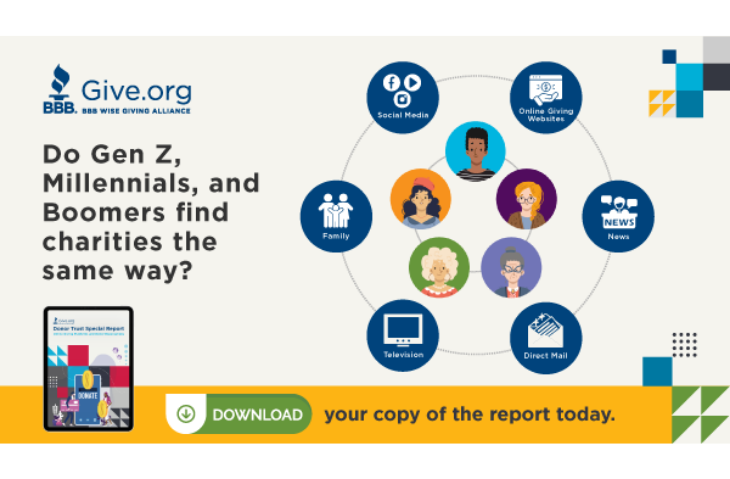
Our survey shows that nearly 60% of adults age 44 and younger say they learn about charitable organizations through social media, and about 29% through giving platforms. Gen Zers and Millennials are especially likely to use giving platforms to discover charities, with 82% of each group reporting they use giving platforms often or sometimes for this purpose.
On the other hand, Matures and Boomers are more likely to say they rarely or never use giving platforms for discovery. Rather than browsing for new organizations, they are more likely to visit a platform to support charities they already know.
Younger donors are more likely to see platform presence as a trust signal.
Younger generations are especially likely to say that a charity’s presence on a well-known giving platform increases their trust in the organization. For example, 58% of Millennials say platform presence increases trust, compared with only 27% of Matures. These findings suggest that younger donors may be more likely to view platforms not only as payment tools, but as environments for charitable discovery.
Younger donors are more likely to assume charities are involved in managing their platform pages.
Most respondents assume that charities either create, maintain, or can modify their donation pages on giving platforms. These assumptions are particularly prevalent among younger generations. Among Gen Z respondents, 45% believe charities create and manage the content of their donation pages, while an additional 32% believe platforms create the pages but charities can edit them.
In contrast, older generations are significantly more likely to say they do not know who manages charity pages on online giving platforms. Across all age groups, relatively few respondents believe that the platform alone creates and manages charity content without any involvement from the charity itself.
Older donors place greater emphasis on verification and oversight.
Respondents across generations expect platforms to play an important role in maintaining trust. However, older donors are especially likely to expect platforms to verify tax-exempt status, ensure information is accurate and current, and confirm compliance with fundraising regulations.
For example, 63% of Boomers expect platforms to ensure that charity information is timely and accurate, compared with 36% of Gen Z respondents. These findings suggest that while younger and older donors value trust, they may define it differently.
Donors across generations prefer charity consent.
One of the most consistent findings in the survey concerns charity consent. When asked to choose between a platform that includes only charities that have explicitly agreed to participate and a platform that includes as many charities as possible, a majority of respondents preferred the platform that includes only authorized charities.
Younger generations are somewhat more receptive to broad inclusion and discovery-oriented models. Nevertheless, most respondents across all generations favor platforms that include charities that have explicitly agreed to be listed or partnered with the platform. For example, 63% of Boomers prefer an authorization-based model, compared with 45% of Millennials.
Donors, especially young adults, value relationships.
Younger generations are more likely to say they want to feel connected to the charities they support and receive updates and communications after making a donation, with nearly half of Millennials saying they prefer to feel connected to the charity, including receiving updates and communication from them.
Building Trust Through Transparency and Accountability
Across generations, the findings suggest that the future of online giving platforms depends on balancing two important priorities: making charitable discovery and giving easier while maintaining the transparency and accountability donors expect.
Donors value the convenience and connections these platforms can provide, but they also expect clear information, charity authorization, and responsible stewardship. Building trust across generations will require attention to all of these expectations.
Explore More Findings and Download the Full Report
Explore additional findings about donor expectations, generational differences, and trust in online giving platforms.
Donor Trust Special Report: Online Giving Platforms and Donor Expectations
Recent Reports
We are always working with charities to publish or update reports for donors. Visit Give.org to check out any charity before giving. Our recently evaluated charities include:
Finally, remember to let us know by going to give.org/charity-inquiry if you are interested in seeing a report on a charity not on the list and we will do our best to produce one.